Overview
Outlier Group ships 1,200 to 1,500 cosmetics and fragrance orders a day in the UK, and 90% of its support tickets were “where's my order?”
They'd already tried AI: their helpdesk's built-in agent. It could answer, but it needed more setup and tuning than a small team had time for, so it never really ran.
Now we set it up and run it for them, and it resolves over 80% of tickets end to end. Their Trustpilot rating went from 3.5 to 4.2.
The Challenge
Currently it's around about 90% of the inquiries are tracking related.
Most customer inquiries came from the same place: customers asking where their order was after it left the warehouse and entered the courier journey.
The information already existed in courier systems, but customers still wanted a clear answer from support. That created a queue full of repetitive tracking tickets, even though the team wanted to spend more time on product range, compliance, regulatory questions, ingredients, and senior-level investigation.
Outlier Group tried the obvious fixes first.
They increased staffing levels. They used email templates. They looked at the AI tools offered by their support provider.
None solved the problem cleanly. Staffing was hard to predict because demand moved with order volume. Templates still required a human to read, click, select, and send. The built-in AI option would have required too much implementation work from a small team that already had to protect live service levels.
There's no way it would have been in place, even answering one single ticket, in the length of time your solution came in for 90% of tickets.
The Solution
The AI agent obviously works 24/7. It copes with demand very, very easily.
Outlier Group implemented an Adelante AI agent inside its existing support operation.
The agent connected the context that mattered for ecommerce support: policies, warehouse management systems, ticket handling, courier logic, order tracking, product information, and escalation rules.
The rollout was controlled from the start. The team began with around 10% of tickets, monitored the replies, checked the information, and verified the responses. Then they moved to 20%, 30%, and kept increasing volume as confidence grew.
That mattered because the team had two clear concerns before launch: data safety and customer perception.
Their customer base skews slightly older, and James, Head of Group Operations at Outlier Group, worried that customers might react badly to an AI agent replacing a UK-based support agent. He was especially concerned about Trustpilot.
We were concerned that the AI may have a negative impact on particularly things like our Trustpilot score.
Impact
I think currently it's 80 plus percent of all tickets are solved end to end by the AI agent.
The AI agent now resolves more than 80% of tickets end to end.
That result gave Outlier Group more than operational efficiency. It created a visible customer experience win.
Since launching Adelante, Outlier Group's Trustpilot rating climbed from 3.5 to 4.2. James tied that lift directly to the AI support experience because customers were specifically mentioning the AI agent, the responses it provided, and the actions it took.
The amount of comments specifically around the AI agent and the responses provided in the actions it's taken has been fantastic.
The public reviews back that up. One recent Trustpilot review names Stacey, the AI support agent, and describes a support issue resolved quickly with zero stress.
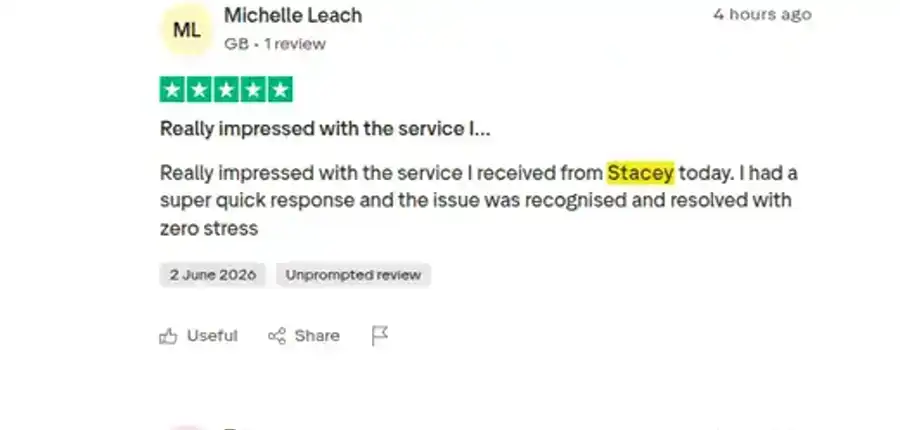
The Trustpilot lift also created a commercial effect. As the score started climbing again, Outlier Group saw sales increase.
We've even seen an increase in sales because our Trustpilot score has started to climb again.
Working with the Team
This is a tool to help you with your workload. It's not designed to replace.
Outlier Group positioned the AI agent as a workload tool, not a replacement plan.
The support team could see the impact in Trustpilot, ticket volume, and orders going out the door. That helped the rollout land positively internally.
Instead of reducing the team, Outlier Group kept the knowledge inside the business and gave the team more time to work on higher-value customer problems.
What we're actually doing is keeping and retaining that talent.
As the business grows, the team does not need to add headcount in the same linear way.
Conclusion
Don't be concerned about the time it takes, the consumer reception, or your response from the team.
Outlier Group did not use AI to make customer service feel smaller. It used AI to make customer service faster, more consistent, and more useful.
For a high-volume cosmetics and fragrance ecommerce website, the result was clear: 80%+ of tickets resolved end to end, faster answers for customers, more time for the support team, and a Trustpilot score that climbed from 3.5 to 4.2.
Customers did not punish the brand for using AI. They mentioned the agent positively in reviews. That makes this case study stronger than a standard automation story.
"The biggest plus for us has certainly been the turnaround in Trustpilot."
Questions about Outlier Group's results
What results did Outlier Group get from its AI support agent?
The agent resolves more than 80% of Outlier Group's support tickets end to end, and the company's Trustpilot rating rose from 3.5 to 4.2. James, Head of Group Operations, tied that lift to the AI support experience because customers mentioned the agent and the actions it took.
Did using an AI agent hurt Outlier Group's Trustpilot score?
No. It was the team's biggest worry before launch, and the rating rose from 3.5 to 4.2 afterwards. Outlier Group also reported an increase in sales as the Trustpilot score climbed.
How did Outlier Group roll out AI support without risking customer experience?
Gradually. The team started with around 10% of tickets, checked the replies and information, then moved to 20%, 30%, and kept increasing volume as confidence grew.
What does the AI agent handle for Outlier Group?
Mostly order tracking. Around 90% of inquiries were tracking-related before automation. The agent connects to Outlier Group's policies, warehouse management system, courier logic, order tracking, product information, and escalation rules.